Durango Western: The Typeface That Commands Attention
Saddle up, designers and creators. If you've been searching for a typeface that doesn't just sit quietly on the page but instead plants its boots firmly and declares its presence, you've likely encountered the challenge of finding something that feels genuinely authentic. Plenty of fonts claim a Western aesthetic, but too many end up looking cartoonish or generic. What you need is something with real grit—something that carries the weight of dusty trails and bold declarations without crossing into parody. That's exactly where Durango Western earns its reputation.
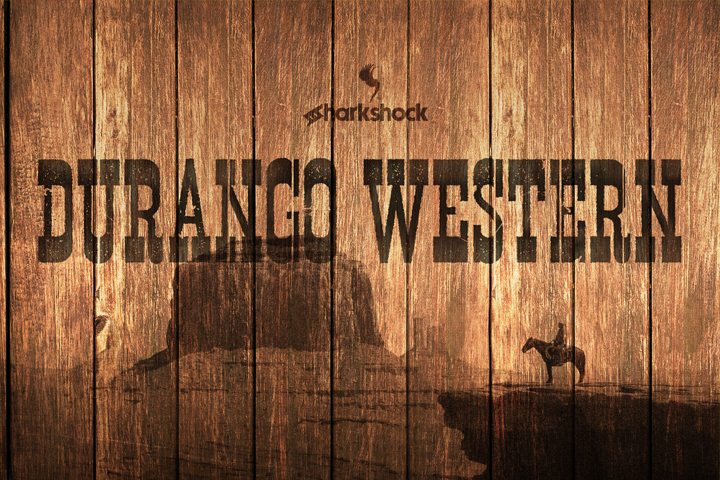
This all-caps display font brings a distinct personality to any project it touches. Defined by its close character spacing and thick, sturdy serifs, it creates a blocky, unmistakable silhouette that readers recognize instantly. There's nothing delicate about it. Every letter stands shoulder to shoulder with its neighbor, forming a unified visual wall that works brilliantly when you need headlines, logos, or titles to hit hard and fast. Think movie posters that demand a second glance, social media graphics that stop the scroll, or team logos that look like they belong stitched onto a leather jacket.
Where This Typeface Truly Shines
Let's talk about real-world applications, because that's what matters when you're investing in a premium font for your creative toolkit. Branding projects benefit enormously from a typeface with this much character. If you run a barbecue restaurant, a craft brewery, a rodeo event, or even an outdoor adventure company, Durango Western immediately signals the kind of rugged, no-nonsense identity your audience expects. It tells people what you're about before they read a single word of your copy.
Logo design is another arena where this font excels. The tight kerning and bold serifs create a stamp-like quality that works beautifully as a primary logotype or as a secondary element paired with a simpler sans serif font. Imagine it stamped onto packaging for artisan goods—hot sauce bottles, beef jerky bags, leather goods, or small-batch whiskey labels. The eroded version adds even more depth here, offering two levels of distress that simulate the look of worn signage or vintage printing. That kind of texture brings instant history and authenticity to a brand identity without requiring hours of manual design work.
Social media managers and content creators, take note. Platforms like Instagram and Pinterest reward bold, visually distinctive graphics. A post featuring Durango Western in its regular or eroded style immediately communicates a mood—adventurous, classic, Americana, or rebellious, depending on your color palette and imagery. It's the kind of typeface that makes a quote card, announcement, or promotional graphic feel intentional and crafted rather than thrown together with whatever default font the platform offered.
Understanding the Two Available Styles
One of the smartest design decisions behind this typeface is the offering of two distinct versions, each serving different creative needs. The regular version keeps things clean and uniform. Uppercase and lowercase characters are identical here, which means you get a consistent, solid appearance regardless of how you type. This version works well when your design already has plenty of visual texture in the background imagery or when you want maximum readability at smaller sizes. It pairs nicely with a wide range of design assets, from photographic backgrounds to illustrated elements.
The eroded version is where things get interesting for projects that call for a weathered, vintage feel. It includes two levels of distress applied between the uppercase and lowercase character slots, giving you flexibility in how much grit and wear you want to show. A few alternates are also included in this version, allowing you to swap out specific characters for variations that break up repetition—particularly useful in longer headlines or when the same letter appears multiple times in close proximity. Keep in mind that the eroded style contains slightly less punctuation than its regular counterpart, so it's worth reviewing the glyph maps before committing to a layout that relies heavily on special characters or diacritics.
Pairing and Practical Considerations
No typeface works in isolation, and smart font pairing is what separates good design from great design. Because Durango Western carries such a strong personality, it benefits from a more restrained companion. A clean sans serif font handles body copy beautifully alongside it—think of something like a geometric or humanist sans serif that provides breathing room and readability at smaller text sizes. Script fonts and handwritten fonts can also complement it well in specific contexts, such as wedding invitations with a rustic theme or menu designs for a country-style eatery. The key is contrast: let the display font own the spotlight while its partner handles the supporting role quietly.
Readability deserves honest attention here. As a display typeface, Durango Western is built for headlines, logos, and short bursts of impactful text. It's not designed for paragraphs of running body copy, and using it that way would compromise legibility. That's not a flaw—it's intentional. Every font has a purpose, and this one's purpose is to grab attention and set a mood in the first half-second someone sees your design. Pair it wisely with a readable body font, and your overall layout will feel both dynamic and professional.
From a practical standpoint, the character set covers serious ground. Basic and extended Latin, European accents, punctuation, diacritics, and kerning are all included. Cyrillic character support for Russian is also part of the package, which opens up usage for international projects or multilingual branding. That kind of comprehensive language coverage isn't always guaranteed with display fonts, so it's a genuine advantage for designers working across markets.
Choosing the Right Font for Your Next Project
Selecting typography always comes back to matching the font's personality with your project's goals. Before you commit to any typeface—Durango Western or otherwise—ask yourself a few grounding questions. What emotion should this design evoke? Who is the audience, and what visual language do they already respond to? Where will this design live—on a screen, on a printed poster, on merchandise, or across all of these? The answers guide you toward the right style and the right pairing.
For entrepreneurs and small business owners building a brand identity from scratch, investing in a quality commercial font like this one pays dividends over time. Consistent use of a distinctive typeface across your website, packaging, social media graphics, marketing materials, and print collateral builds recognition. People start associating that visual style with your business. That's the foundation of strong branding—repetition with purpose.
Designers working on editorial layouts, digital products, or marketing assets will find this typeface adds a thematic anchor to projects that might otherwise feel generic. A blog header, a podcast cover, a YouTube thumbnail, or a promotional poster all benefit from typography that carries narrative weight. Durango Western doesn't just display words—it tells a story the moment someone looks at it.
Take time to explore the glyph maps, test the eroded alternates, and experiment with pairings before finalizing your design. The best results come from understanding what a font offers and using those features with intention. Whether you're crafting a wanted poster for a themed event, designing merchandise for a Western-inspired brand, or simply looking for a display typeface that refuses to blend into the background, this one delivers character that's hard to fake.