Why Your Next Project Needs a Font With Personality
Imagine walking into a cozy, sunlit bookstore where the shelves are lined with leather-bound journals and handwritten notes pinned to a corkboard. There’s a warmth there, a sense of authenticity that digital screens often strip away. You want to capture that feeling in your work—that tangible, human touch that makes people stop scrolling and start connecting. Finding a typeface that embodies this spirit without looking messy or unprofessional is the key to bridging the gap between digital precision and analog charm. It’s about finding a voice that speaks directly to the heart of your audience, whether you’re designing a wedding invitation or a coffee shop menu.
Capturing the Handwritten Essence
There is a distinct difference between a font that tries too hard to look handwritten and one that actually succeeds in mimicking the natural flow of ink on paper. The latter usually features subtle imperfections, varied baselines, and organic curves that feel effortless. This style is incredibly effective for creating an immediate emotional connection. When a viewer sees text that looks like it was personally penned, it triggers a psychological response associated with intimacy and care. This is why script fonts and handwritten typefaces are staples in creative industries; they strip away the corporate stiffness that standard sans-serifs sometimes carry.
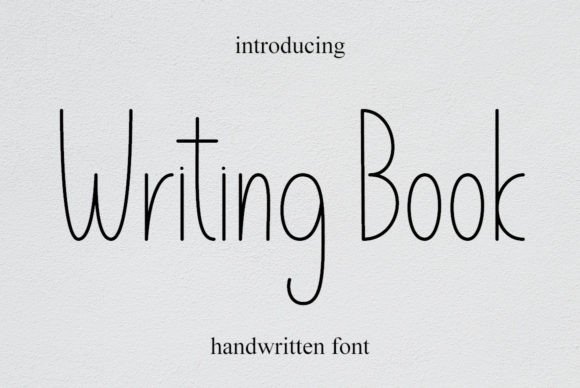
Take, for instance, a typeface like Writing Book. It is a simple and friendly handwritten font that manages to be whimsical without sacrificing legibility. It’s the kind of typeface that feels like a warm greeting. It doesn't just sit on the page; it interacts with the reader. The "quirky" aspect of its personality adds a layer of playfulness, making it suitable for brands that don't take themselves too seriously but still demand high-quality design assets. It’s versatile enough to brighten up a design while maintaining the structure needed for professional presentation.
Practical Applications: From Screen to Print
The versatility of a well-crafted handwritten font extends far beyond just one medium. As designers and entrepreneurs, we often need assets that can travel seamlessly across different platforms. A font that looks stunning on a website header must also hold up when printed on a textured card stock or embroidered on merchandise.
Consider the following scenarios where this style of typography truly shines:
- Branding and Logo Design: For businesses in the lifestyle, beauty, food, or artisanal sectors, a handwritten logo sets the tone immediately. It suggests that the product or service is crafted with a personal touch. Using a font like Writing Book for a bakery logo or a boutique clothing tag instantly communicates a bespoke, approachable vibe.
- Packaging Design: Think about the last time you picked up a product because the label looked "homemade" or authentic. Script fonts are powerful tools in packaging design. They can highlight ingredients, suggest flavor profiles, or simply add a decorative flourish that makes the product stand out on a crowded shelf.
- Invitations and Stationery: This is perhaps the most traditional home for handwritten typography. Wedding invitations, baby shower announcements, and greeting cards rely heavily on the elegance of script. A whimsical typeface adds the necessary celebratory flair without looking like a generic template.
- Digital Products: If you are selling planners, e-books, or social media templates, typography is part of your value proposition. Including a commercial font license for a premium font like this within your digital products adds significant value for your customers, allowing them to replicate the aesthetic you’ve created.
Strategic Typography: More Than Just Pretty Letters
While the aesthetic appeal is the first thing we notice, the strategic application of a font determines the success of the project. Typography is a silent ambassador for your brand. Using a creative font consistently across your marketing assets helps build brand recognition. When your audience sees that specific style of lettering on Instagram, then on your website, and finally on your invoice, a cohesive visual identity is formed.
However, there is a delicate balance to strike. The "quirky" nature of display fonts means they are best used for headlines, sub-headers, or call-to-action phrases. They are designed to grab attention. For body text, readability is paramount. A common mistake in design is using a highly stylized script font for long paragraphs. This causes eye strain and reduces the time a visitor spends on your page.
Therefore, understanding font pairing is essential. A handwritten font pairs beautifully with a clean, geometric sans-serif or a classic serif. For example, if you use Writing Book for your main headline—"Summer Collection Out Now"—you might pair it with a simple sans-serif like Montserrat or Lato for the product descriptions below. This contrast creates a visual hierarchy that guides the reader’s eye naturally from the artistic element to the informational content.
Refining Your Visual Communication
When integrating a new typeface into your workflow, it is wise to treat it as a design asset that requires testing. Don't just download it and use it in the final version immediately. Experiment with it.
Here are a few tips for getting the most out of your typography choices:
- Test for Scalability: A whimsical font might look charming at 12 points, but does it lose its detail when blown up for a poster? Conversely, does it become illegible when shrunk down for a mobile footer? High-quality premium fonts are usually optimized for various sizes, but always test this on your specific canvas.
- Check the Glyphs: Many modern fonts come with stylistic alternates, ligatures, and swashes. These are variations of standard letters that allow you to customize the look. For a handwritten font, having access to different versions of the letter 's' or 't' can make a logo look truly custom rather than "off the shelf."
- Mood Alignment: Does the font match the emotional tone of your copy? A quirky, friendly font is perfect for a "Happy Birthday" banner or a casual blog post, but it might not be the right choice for a formal corporate report or a law firm's website. Ensure your typography reinforces your message rather than contradicting it.
Ultimately, the goal of modern typography is to facilitate communication. Whether you are a small business owner designing your own flyers or a content creator looking to spice up your social media graphics, the right typeface does the heavy lifting of setting the mood. It tells your audience who you are before they even read a single word of your content. By choosing a font that is both visually appealing and functionally sound, you ensure that your message is not just seen, but felt.