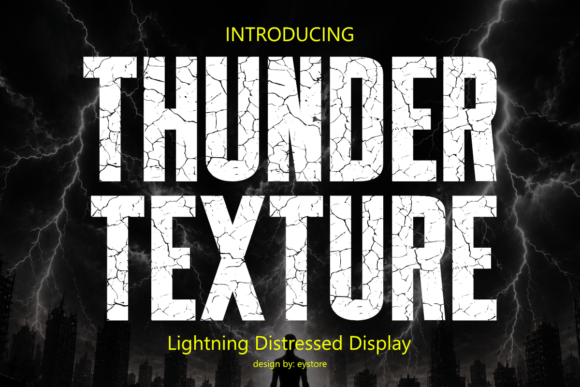
Thunder Texture: A Distressed Font for Bold Visuals
There are moments in design when you need to make a statement that isn't just heard, but felt. You're working on a poster for an underground music festival, branding for a new line of rugged outdoor gear, or a logo for an e-sports team that needs to project raw power. The typical clean, modern fonts feel too polite, too sterile for the job. You need typography that brings its own energy, texture, and a sense of unapologetic impact. This is where a typeface like Thunder Texture steps in, not as a subtle tool, but as a central element of the design's voice.
Anatomy of a Distressed Display Font
At its core, Thunder Texture is a bold sans serif display font. "Display" is the key term here—it’s not intended for body text in a novel or a lengthy website article. Its job is to headline, to grab attention from a distance, and to set a specific, powerful mood. The visual character is immediately defined by its distressed texture. The cracks and rough edges aren't random noise; they’re carefully crafted to evoke specific imagery. Think of the jagged pattern of a lightning strike frozen in time, or the deep fissures in sun-baked earth. This gives the typeface an inherent sense of energy and age, a feeling that it has survived something intense.
The "thunder" in its name speaks to its volume and presence. The letterforms are heavy, with a solid, grounded structure. This isn't a delicate or whimsical script font. It’s a masculine, rugged typeface built for projects that require a heavy metal, industrial, or vintage grunge aesthetic. The distressed details add a layer of authenticity that clean fonts often lack, making it feel less manufactured and more crafted, like a piece of reclaimed wood or a well-worn leather jacket.
Where This Typeface Truly Shines: Practical Applications
Understanding a font's personality is one thing; knowing where to deploy it is what brings real value. For designers, entrepreneurs, and creators, Thunder Texture offers a potent solution for a range of projects where a strong visual hook is non-negotiable.
- Branding & Logo Design: This is a prime use case. For businesses in sectors like automotive customization, energy drinks, adventure tourism, or even a local brewery with a bold IPA, a logo set in Thunder Texture can instantly communicate strength, edge, and a no-frills attitude. It helps a brand stand out in a crowded market by establishing immediate brand recognition through a unique typographic identity.
- Merchandise & Apparel: The print-on-demand (POD) world thrives on standout graphics. A t-shirt, hoodie, or cap design using this font carries a built-in cool factor. It’s perfect for band merch, motivational gym wear, or streetwear brands that want to project an urban, gritty vibe. The texture translates well to screen printing and DTG, adding depth to simple text-based designs.
- Posters & Editorial Layouts: Imagine a movie poster for a thriller or an action film, or a book cover in the horror or dystopian genre. Thunder Texture can set the tone for the entire piece. Similarly, in editorial design for a music magazine or a feature on extreme sports, using this font for pull quotes or section headers injects immediate drama and visual interest.
- Digital Presence & Social Media: In the fast-scrolling world of social media, capturing attention is paramount. A YouTube thumbnail, an Instagram story, or a Facebook ad for a product launch can leverage this font's high-impact style to stop the scroll. For websites, it’s best used sparingly—think hero section headlines or key call-to-action buttons—to maintain readability while delivering maximum punch.
- Packaging & Marketing Assets: For physical products, packaging is the first tactile experience. A craft hot sauce, a specialty coffee blend, or a line of beard care products could use Thunder Texture on their labels to convey a handcrafted, artisanal, and powerful brand story. It works equally well on digital assets like email headers or PDF report covers.
Making It Work: Pairing and Practical Considerations
Deploying a display font with this much character requires a thoughtful approach. It’s a design asset, not a universal solution. Here’s how to integrate it effectively into your projects.
The Art of Font Pairing
Thunder Texture is a soloist, not a member of the choir. Pair it with a clean, highly legible serif font or a modern sans serif font for body text. A classic combination might be using Thunder Texture for a main headline, followed by a neutral font like Open Sans, Lato, or a simple serif like Merriweather for subheadings and paragraphs. This contrast allows the display font to do its job—command attention—while the supporting type ensures the message is easily readable. Avoid pairing it with other highly decorative or script fonts, as this will create visual chaos and undermine professionalism.
Readability is Still Key
While its distressed texture adds character, it can impact legibility at very small sizes or in long passages. This is why it’s designated for display use. Always test your designs at the intended size. For a logo, ensure the company name is clear at both a small favicon size and a large billboard scale. For a poster headline, step back from the screen or print a draft to see if the text is instantly comprehensible from a distance. The goal is impactful clarity, not just impact.
Exploring the Font's Full Potential
A premium font like this often comes with more than just the basic uppercase and lowercase letters. Check the included font styles and character sets. Does it have stylistic alternates, ligatures, or a set of distressed symbols? These extras can be gold for customization, allowing you to tweak the look slightly for different applications—maybe using a more heavily textured version for a large poster and a cleaner variant for a smaller logo element.
The Commercial License Question
If you’re using Thunder Texture for any project that generates revenue—whether it’s a client’s logo, merchandise for sale, or marketing materials for your business—you must ensure you have the correct commercial font license. This is a standard and crucial part of using design assets professionally. Reputable font marketplaces will clearly outline what is and isn’t permitted under different license types (e.g., desktop, webfont, app, ePub). Respecting the license protects you legally and supports the type designers who create these valuable tools.
Final Thoughts on Choosing Your Typographic Voice
Choosing a typeface is a strategic decision. It’s not just about what looks cool, but what communicates the right message to the right audience. Thunder Texture isn’t for a law firm’s annual report or a children’s book. Its power lies in its specificity. For the right project—a bold brand identity, an edgy product line, a piece of digital content that needs to stand out—it can be the element that ties the entire visual language together. It provides a ready-made aesthetic that can save hours of design time trying to achieve a similar effect manually. By understanding its personality, testing its application, and pairing it wisely, you can leverage this creative font to produce work that is not only visually striking but also strategically sound.