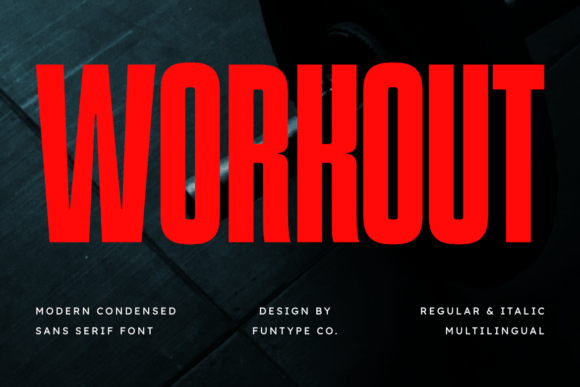
Workout: The High-Impact Typeface for Commanding Designs
There's a particular kind of energy you need to capture when designing for brands that sell strength, speed, or forward momentum. It’s that feeling of controlled power, of a system built for performance. Finding a typeface that embodies this without feeling cheap or gimmicky can be a real challenge. You need something that feels solid, modern, and intentional. That’s exactly the space the Workout font family occupies—a condensed sans serif built for visuals that demand attention and communicate authority from the first glance.
Engineered for Presence: More Than Just Bold Letters
At its core, Workout is a display typeface. That means it's designed for headlines, logos, and large-scale applications where immediate impact is the primary goal. Its tall, bold letterforms have a distinct industrial feel, reminiscent of engineered systems and athletic branding. The characters are tightly condensed, allowing you to pack a powerful message into a compact space, which is incredibly useful for design work where real estate is limited, like app icons or social media banners.
The solid, geometric structure gives it a sense of reliability and strength. Unlike overly stylized fonts that can quickly date a design, Workout’s modern aesthetic feels both current and adaptable. It’s a premium font that avoids unnecessary frills, focusing instead on clean, authoritative shapes. This makes it a versatile tool in your design assets library, suitable for a wide range of commercial and creative projects.
Where This Typeface Truly Shines: Practical Applications
Understanding a font's personality is one thing; knowing how to apply it effectively is where the real value lies. Let's move beyond theory and look at concrete scenarios where Workout’s characteristics solve common design problems.
Branding and Logo Design
For a gym, a sports nutrition company, or a performance apparel brand, the logo is the cornerstone of the identity. Workout’s inherent sense of power makes it a natural fit. Its condensed nature allows the brand name to be prominent even in small formats, like on a clothing tag or a favicon. The clean lines ensure it reproduces flawlessly in single-color applications, which is essential for merchandise and print materials. When used in logo design, it immediately sets a tone of professionalism and vigor.
Packaging and Merchandise
On a crowded shelf or in an online store, packaging has mere seconds to make an impression. Workout’s bold, high-contrast forms create excellent readability from a distance. Imagine it on a box for workout supplements, a bottle of energy drink, or the hang tag for a new line of athletic wear. The slanted italic style can add a dynamic touch to callouts like “New Formula” or “Limited Edition,” creating a sense of urgency that drives engagement.
Digital Presence: Websites and Social Media
Your website's headers and your social media graphics are often the first interaction a potential customer has with your brand. Using Workout for headlines on a fitness blog, a tech startup’s landing page, or a YouTube thumbnail creates immediate visual hierarchy and draws the eye. It’s particularly effective for creating scroll-stopping Instagram Stories or LinkedIn banners where a clear, bold message is critical. Pair it with a more neutral, readable sans serif font for body text to maintain clarity while letting the headlines do the heavy lifting.
Print and Editorial Layouts
Don’t limit this typeface to digital-only projects. In editorial design, such as a magazine spread for an automotive feature or a poster for a local charity run, Workout can command the page. It provides a strong anchor point for the layout, helping to organize information and guide the reader's eye through the content in a logical, engaging way.
Making It Work: Practical Guidance for Your Projects
Having a powerful tool is great, but knowing how to wield it is what separates good design from great design. Here are some actionable tips for integrating Workout into your workflow effectively.
Choosing the Right Style: The family includes two styles: Regular and Italic. Use the Regular style for primary logos, main headlines, and static brand elements where stability is key. The Italic version is your secret weapon for adding motion. Use it for secondary headlines, promotional callouts (“Shop Now,” “Learn More”), or anywhere you want to inject a feeling of speed and action without disrupting the overall visual consistency.
Font Pairing Strategy: A display font like Workout needs a partner that complements, not competes. For body copy, pair it with a highly legible, neutral sans serif font or even a classic serif font. The contrast in weight and style will make both typefaces more effective. Test pairings in context—create a mock-up of your actual project to see how the fonts interact at the intended sizes.
Readability First: While Workout is designed for impact, remember its primary role. It is not intended for long paragraphs of small text. Its strength lies in headlines and key phrases. Always prioritize the reader's experience; ensure your body text is set in a typeface optimized for extended reading.
Licensing and Commercial Use: If you’re using Workout for a client project, a product you sell, or any commercial venture, ensure you have the appropriate commercial license. This is a standard practice for any premium font and protects both you and the font designer. Review the license details before finalizing your project to avoid any legal complications down the line.
A Final Thought on Building Visual Language
Choosing a typeface is a strategic decision. It’s a fundamental part of your visual language that communicates values and sets expectations before a single word is read. Workout offers a specific voice: one of strength, efficiency, and modern appeal. By thoughtfully applying it to the right projects—whether it’s a high-energy brand identity, a compelling social media campaign, or a striking piece of print—you’re not just decorating a page. You’re building a coherent, recognizable, and professional presence that resonates with your intended audience. It’s about matching the tool to the task to create work that is not only seen but felt.