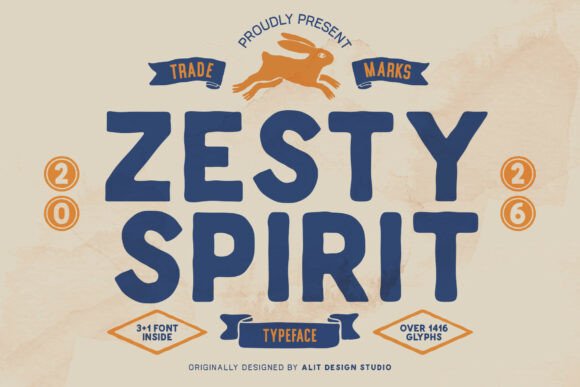
Zesty Spirit: Capture the Spirit of Adventure with Authentic Grit
There is a specific feeling you get when you hold a well-worn leather journal or spot a vintage trail marker in the woods. It’s a sense of history, authenticity, and rugged reliability. In the digital world, we often struggle to replicate that tangible connection. We search for tools that don't just look good on a screen but feel like they have a story to tell. That is exactly the energy that the Zesty Spirit font family brings to the table. It is more than a collection of letters; it is a bridge between modern design efficiency and the raw, imperfect beauty of the past.
If you have ever tried to design a logo for an outdoor brand or create merchandise for a local coffee shop, you know the struggle. You want that "hand-made" look, but standard digital fonts often appear too clean, too sterile, or obviously fake. Zesty Spirit solves this problem by embracing the "seek and strike" mentality. It captures the essence of vintage rubber stamps—the uneven ink distribution, the rough edges, and the pressure marks that tell a story of use and endurance. For designers, entrepreneurs, and creatives, this typeface offers a way to inject genuine character into a project without spending hours manually distressing vector points.
The Anatomy of a Rugged Typeface
What sets Zesty Spirit apart from other display fonts is its comprehensive nature. When you invest in a premium font like this, you aren't just getting a single file. You are acquiring a complete design ecosystem. The family includes three distinct weights: Bold, Thin, and High. Each style serves a specific purpose in typography hierarchy. The "High" variant, for instance, is perfect for creating tall, imposing headers that demand attention, while the "Bold" weight offers a solid foundation for stacked typography logos.
However, the real magic lies in the details. With over 1,416 glyphs, this font family offers an extensive library of alternates and catchwords. This means you can type the same word twice, and by swapping out specific letters, make each instance look unique. This level of customization is crucial for brand identity. It prevents your typography from looking generic or "template-like." Furthermore, the included matching illustrations allow you to build badges and crests that look cohesive, as if they were stamped onto the page by the same vintage machinery.
Practical Applications: From Screen to Stitch
Understanding the visual appeal of Zesty Spirit is one thing; knowing how to apply it effectively is another. This typeface shines brightest in projects that require a tactile, human element. It is a versatile asset that bridges the gap between digital marketing and physical products.
For those in the apparel industry, this font is a game-changer. Screen printing and embroidery often struggle with overly delicate serifs or complex script fonts. Zesty Spirit’s rough, bold construction mimics the look of distressed screen prints perfectly. Whether you are designing for a t-shirt line, a trucker cap, or tote bags, the letterforms hold up well at various scales, maintaining readability while retaining that coveted vintage vibe.
In the realm of packaging design, particularly for artisanal goods, visual communication is everything. Imagine a craft beer label or a bag of specialty coffee. These products compete on shelves where texture and authenticity drive purchasing decisions. Using this typeface for your headline copy or brand name instantly signals quality and care. It tells the consumer that the product inside is crafted with the same attention to detail as the label on the outside.
Don't overlook the power of this font in digital spaces, either. Social media graphics often suffer from a lack of personality. By utilizing Zesty Spirit for Instagram posts or YouTube thumbnails, you create a distinct visual voice that stands out in a crowded feed. It works exceptionally well for outdoor travel blogs, adventure vlogs, or any content creator looking to establish a rugged personal brand.
Building a Cohesive Brand Identity
Typography is the voice of your brand, and consistency is the key to recognition. When you use a font family that offers multiple styles and weights, you can create a hierarchy that guides the viewer’s eye naturally. Zesty Spirit allows you to pair a heavy, textured headline with a cleaner body copy (perhaps a simple sans serif font) to ensure readability.
A common mistake in branding is using a single decorative font for everything. This can lead to visual clutter and make your message hard to decipher. The Zesty Spirit family encourages a balanced approach. You can use the "Bold" style for your primary logo to establish authority, and then use the "Thin" style for secondary elements like subheadings or taglines. This creates a system where all the parts relate to one another, reinforcing your brand identity across different touchpoints.
Consider the psychology of color and texture when pairing this font with your brand palette. The rough edges of the typeface pair beautifully with earth tones, muted pastels, or stark monochromatic schemes. If you are designing for a camping gear startup, combining this font with deep forest greens and weathered leather textures creates an immersive experience. For a surf brand, pairing it with sun-bleached blues and sandy neutrals evokes the feeling of the coast.
Navigating Readability and Pairing
While display fonts are fantastic for impact, they require a thoughtful approach to usability. Zesty Spirit is designed primarily for headlines, logos, and short bursts of text. Its textured nature means it performs best at larger sizes where the details of the "stamp" effect can be appreciated. If you try to use this font for long paragraphs of body text, the rough edges may become visually fatiguing for the reader.
To solve this, you need a strong font pairing strategy. A classic approach is to pair a vintage display font with a clean, modern sans serif. The contrast between the textured, organic feel of Zesty Spirit and the geometric precision of a font like Montserrat or Roboto creates a dynamic tension. The display font grabs attention, while the sans serif delivers the detailed information clearly and efficiently.
When testing your pairings, pay close attention to x-height and weight. You want the secondary font to complement the primary one, not compete with it. If you are using the "Bold" weight of Zesty Spirit for a headline, a medium-weight sans serif usually works best for the subtext. Always test your typography in context—mock it up on a business card, a website header, or a mobile screen—to ensure the hierarchy is clear across all devices.
Maximizing Your Design Toolkit
To truly get the most out of a creative font like this, you need to explore the full glyph set. Many designers purchase a font and only use the standard A-Z characters. With Zesty Spirit, you are leaving value on the table if you ignore the alternates and catchwords. Experiment with the ligatures and swashes to customize your wordmarks. This is particularly useful for logo design, where you want the typography to feel unique to the client.
Another practical tip involves the commercial licensing aspect. If you are a small business owner creating merchandise for sale, or a designer working on client projects, ensure you have the correct license. A standard desktop license usually covers printing on paper and merchandise, but if you plan to embed the font in a mobile app or a website using @font-face, you may need a web or app license. Understanding these distinctions protects your business and ensures you can use the asset without legal hurdles.
Finally, don't be afraid to mix and match. While Zesty Spirit is a powerful standalone system, it also plays well with others. Try using it alongside a handwritten script font for a more personal, "journal-entry" aesthetic, or pair it with a bold serif for a more editorial, magazine-style look. The goal is to create a visual language that resonates with your audience. By leveraging the authentic grit and adventurous spirit of this typeface, you can build designs that don't just look good—they feel real.