Fresh Burger: A Chunky Typeface with Serious Brand Flavor
There's a moment in every design project when you need a typeface that doesn't just sit there—it grabs attention, fills space with confidence, and communicates something visceral. Maybe you're wrapping a burger joint's identity, designing a food truck menu that needs to pop from twenty feet away, or crafting social media posts for a snack brand. You need something bold, friendly, and unmistakably modern. That's the space Fresh Burger occupies, and it does so with a kind of typographic swagger that's hard to ignore.
More Than Just a Bold Font
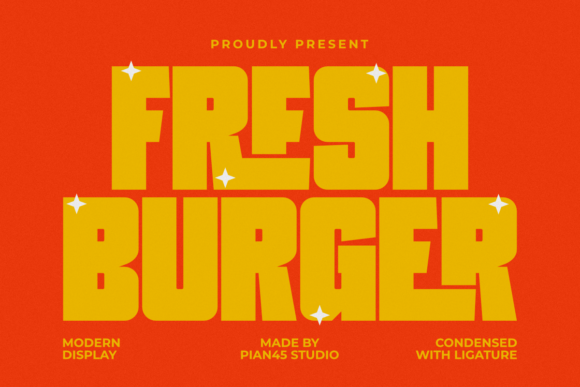
At first glance, Fresh Burger reads as a chunky, all-caps display typeface with a solid, blocky structure. But spend a few minutes with it and you'll notice the details: unique ligatures that connect certain letter pairs in unexpected, artistic ways. These aren't just decorative flourishes—they give the font a personality that feels handcrafted yet precise. The thick, clean lines deliver excellent readability even at smaller sizes for a display font, which is a practical advantage when you're working on packaging where text might wrap around a box or appear on a curved label.
What makes it particularly useful for branding is that balance between playfulness and professionalism. It doesn't look childish, but it doesn't feel corporate either. That middle ground is surprisingly hard to find in modern typography, and it's exactly where many small businesses, food brands, and creative entrepreneurs need to live. A bakery that wants to feel approachable but trustworthy, a food truck that needs to look established without being stiff, a craft beverage brand aiming for shelf appeal—these are the kinds of projects where this typeface genuinely shines.
Where This Typeface Really Works
Let's talk specifics, because knowing a font looks "cool" doesn't help you decide whether it fits your project. Here are some real-world applications where Fresh Burger earns its place in a designer's toolkit:
- Logo design – The all-caps structure and distinctive ligatures create logos that are memorable and scalable. Think about how a burger restaurant name would look on a storefront sign, a website header, and a tiny favicon—all from the same typeface.
- Packaging design – Food packaging demands instant recognition. The bold weight and friendly character of this font make product names jump off the shelf, whether it's a bag of artisan chips or a jar of specialty sauce.
- Social media graphics – Instagram stories, Facebook ads, TikTok overlays—these platforms are noisy. A display font with this much visual weight cuts through the scroll and stops thumbs.
- Restaurant menus and signage – From dine-in menus to drive-through boards, readability at a glance matters. The chunky letterforms hold up well in both digital and print environments.
- Merchandise and apparel – T-shirts, hats, tote bags—bold typefaces with personality translate naturally to wearable design, especially for brands with a strong visual identity.
- Event invitations and posters – Food festivals, pop-up dinners, community cookouts. These events need promotional materials that feel festive and inviting, and a typeface like this sets that tone immediately.
- Editorial layouts and blogs – Pull quotes, section headers, and feature titles in food magazines or recipe blogs benefit from a display typeface that adds energy without overwhelming the body text.
It's worth noting that display fonts like this aren't meant for long paragraphs of body copy. That's where you'd pair it with a clean serif font or sans serif font for readability. Think of Fresh Burger as the headline act—it handles the spotlight while a more understated typeface handles the supporting role.
Building a Cohesive Brand Identity
One of the most overlooked aspects of font selection is consistency. A brand that uses five different typefaces across its materials looks scattered. One that commits to a primary display font and a complementary body font creates a visual system people start to recognize instinctively. That's brand recognition in action, and it doesn't require a massive budget—just thoughtful choices.
When you adopt a typeface like Fresh Burger as part of your brand identity, you're making a statement about your brand's personality. It says: we're bold, we're modern, we don't take ourselves too seriously, but we care about quality. That message comes through whether someone sees your logo on a delivery bag, your Instagram ad on their phone, or your poster pinned up at a local market.
For small business owners and entrepreneurs, this kind of visual consistency used to require hiring a branding agency. Now, with premium fonts that include multiple styles and weights, you can build a professional-looking identity yourself. The key is choosing a typeface that genuinely reflects your brand's voice—and then using it deliberately across every touchpoint.
Pairing and Practical Considerations
No font works in isolation. The real skill in typography is knowing how to combine typefaces so they complement rather than compete. Here's some practical advice for working with a bold display font like this one:
- Pair it with something simple. A geometric sans serif or a clean serif font works well for body text. You want contrast in weight and structure, not conflict. Think Montserrat, Lato, or even a classic like Garamond underneath a chunky display header.
- Test at multiple sizes. What looks incredible at 72 points might lose its charm at 18 points. Always preview your font pairings at the actual sizes they'll appear in your final design.
- Watch your spacing. Bold, blocky typefaces often need slightly more letter-spacing than you'd expect, especially in all-caps settings. Don't be afraid to adjust tracking manually.
- Consider the context. A typeface that works beautifully on a food truck wrap might feel too heavy for a wedding invitation. Match the font's personality to the project's tone.
- Review the full character set. Before committing, check what's included—numbers, punctuation, special characters, alternate ligatures. Knowing the full range of what's available helps you use the font more creatively.
Commercial licensing is another practical detail worth addressing. If you're using a font for client work, merchandise you sell, or any project that generates revenue, make sure you have the appropriate license. Most premium fonts offer different tiers for personal and commercial use. It's a small investment that protects you legally and supports the designers who create these tools.
Why Bold Typography Matters Right Now
We're living in a visual economy. People make snap judgments about brands based on what they see in the first two seconds. A food brand with a generic, default font on its packaging signals something very different from one with intentional, character-rich typography. The first says "I threw this together." The second says "I thought about this. I care about how you experience my brand."
That's not about spending thousands on design—it's about making smart choices with the design assets available to you. A creative font like Fresh Burger gives you a shortcut to visual impact. It carries personality in its letterforms, so you don't have to work as hard to inject energy into your layouts. The ligatures add visual interest. The weight commands attention. The overall aesthetic feels current without being trendy in a way that'll look dated in eighteen months.
Whether you're a designer building out a client's food brand, a small business owner creating your own marketing materials, or a content creator looking for a typeface that makes your graphics stand out in a crowded feed, having a reliable bold display font in your collection is genuinely useful. It solves real problems—how to make a headline pop, how to give a logo personality, how to create packaging that actually sells.
The best typography choices aren't about following trends or picking the most popular option. They're about finding typefaces that serve your specific project's needs and your audience's expectations. For anyone working in food branding, casual dining, street food, or playful consumer products, a chunky modern display typeface with distinctive ligatures and a friendly attitude is worth serious consideration. It might just be the ingredient your next project has been missing.