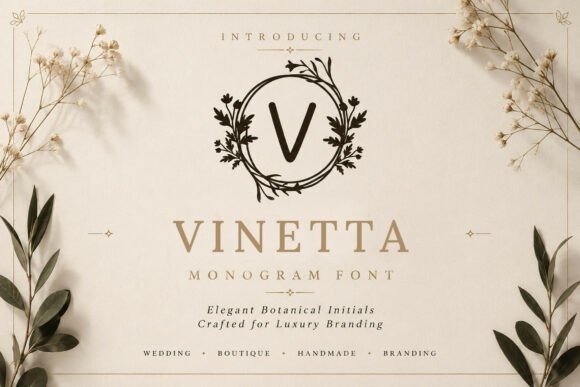
Vinetta Monogram: A Botanical Typeface for Timeless Branding
There’s a particular kind of elegance that feels both personal and enduring—think of a handwritten letter sealed with wax, or a monogram etched onto vintage jewelry. This is the essence captured by Vinetta Monogram, a botanical font that weaves delicate floral wreaths and graceful, handcrafted letters into a cohesive visual language. It’s more than just a typeface; it’s a design tool crafted for moments and brands that demand a touch of romance, luxury, and authenticity. Whether you’re designing a wedding suite, launching a boutique skincare line, or building a brand identity that stands out in a crowded market, this font offers a distinct aesthetic that resonates with quality and care.
Understanding the Visual Character of This Botanical Font
At its core, Vinetta Monogram is a display font designed for impact. Each letterform is framed by intricate, nature-inspired ornaments—think climbing vines, subtle leaves, and soft floral accents. This isn’t a minimalist sans serif; it’s a script font with a strong personality, blending vintage elegance with modern simplicity. The result is a typeface that feels both timeless and fresh, avoiding the overly ornate look of some traditional monograms while still delivering significant visual detail.
What makes it particularly versatile is its balance. The botanical elements are integrated thoughtfully, enhancing the letter without overwhelming it. This allows the font to maintain a level of readability crucial for practical applications, from product labels to social media graphics. It’s a premium font that understands the line between decorative art and functional design, making it a valuable asset for creators who need their typography to do more than just spell words.
Practical Applications: Where This Typeface Shines
The true test of any creative font is how it performs in real-world projects. Vinetta Monogram excels in contexts where storytelling and brand identity are paramount. For logo design, especially for boutique businesses, it provides an immediate sense of craftsmanship and attention to detail. A jewelry brand, a luxury stationer, or a high-end florist could use it to establish a brand identity that feels personal and curated.
Beyond logos, its applications are broad and practical:
- Packaging Design: Imagine this font on a candle box, a perfume bottle, or artisanal chocolate packaging. It instantly communicates quality and care, elevating the unboxing experience.
- Wedding and Event Stationery: From save-the-dates to menu cards, the floral monograms add a romantic, cohesive touch to any suite. It’s perfect for couples seeking a handmade feel without the cost of custom calligraphy.
- Social Media and Digital Presence: In a feed full of generic fonts, a botanical monogram can make a brand’s Instagram stories, highlight covers, or promotional graphics instantly recognizable. It’s a powerful tool for visual consistency.
- Editorial and Marketing Materials: Use it for magazine headers, blog post titles, or email marketing templates to add a layer of sophistication that engages readers and reinforces a brand’s aesthetic.
- Personalized Products: For creators on platforms like Etsy, this font is ideal for designing custom prints, monogrammed gifts, or digital downloads, offering a professional finish that justifies a premium price point.
The key is to use it strategically. It’s not meant for long paragraphs of body text. Instead, it’s a hero element—a tool for headlines, logos, and accents that define a project’s visual tone.
Integrating Vinetta Monogram into Your Design Workflow
Adopting a new typeface into your toolkit requires more than just installation. To leverage Vinetta Monogram effectively, consider these practical steps for font pairing and implementation.
First, choose complementary fonts. Because Vinetta is detailed and decorative, it pairs best with simple, clean companions. A classic serif font like Garamond or a clean sans serif font like Montserrat can provide excellent contrast for body text, ensuring your overall design remains balanced and readable. Avoid pairing it with other highly ornate scripts, which can create visual clutter.
Second, consider the context. Will the text be viewed on a screen or in print? For smaller sizes, like on a business card or a mobile screen, you might use a simplified version of the monogram or increase spacing slightly. Always test your designs at the intended output size to ensure the delicate botanical details remain clear and impactful.
Third, review the included font styles. Many premium fonts come with alternates, ligatures, or stylistic sets. Exploring these options can give you even more creative control, allowing you to customize the monogram’s look for different applications while maintaining a consistent brand identity.
Finally, understand the licensing. For any commercial font, especially one used for client work or product sales, ensure your license covers the intended use. This protects both you and the font creator and is a professional standard in the design industry.
The Lasting Value of Thoughtful Typography
In a landscape saturated with quick, disposable design, choosing typography like Vinetta Monogram is an investment in quality. It’s not just about making something look pretty; it’s about communicating a specific set of values—elegance, care, timelessness, and authenticity. This font helps bridge the gap between a generic online presence and a memorable visual identity.
For the small business owner, it offers a way to compete with larger brands on an aesthetic level. For the designer, it provides a versatile asset that can solve multiple client briefs. For the content creator, it’s a shortcut to creating professional-looking graphics that engage an audience. Ultimately, it’s a tool that respects the user’s intelligence and the project’s goals, offering sophisticated design solutions that feel both personal and polished.
When your project calls for a voice that whispers of heritage, nature, and refined taste, this botanical monogram typeface answers with quiet confidence. It’s a reminder that in the details of design, beauty and function can, and should, grow together.